


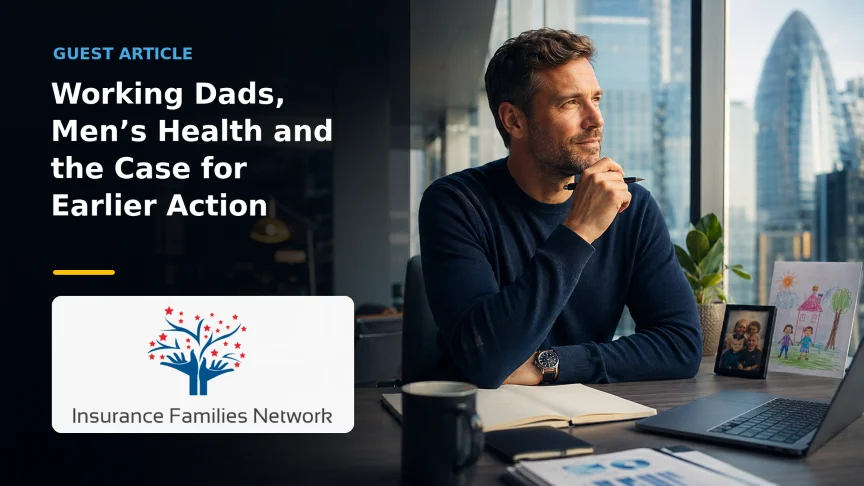
Working Dads, Men’s Health and the Case for Earlier Action
Why the Insurance Families Network (IFN) is supporting Thrive4Life’s Men’s Health Matters campaign
For many working fathers, life is lived at speed.
Balancing leadership responsibilities, family life, caring commitments and financial pressures, many men are used to “pushing through” - often at the expense of their own health.
Not because they do not care, but because they have become very good at coping.
This is why The Insurance Families Network (IFN) is proud to support Thrive4Life’s Men’s Health Matters campaign - because men’s health is not just a personal issue, it is a family, workplace and inclusion issue.
Why this matters to IFN
As a volunteer-led network supporting parents and carers across the insurance market, IFN champions a more family-friendly industry - one where people can progress at work while being recognised as parents, carers and whole people with lives beyond their roles.
Men’s health is a critical part of that conversation.
When men feel too busy, under pressure or reluctant to seek help, the impact is not just individual - it is felt across families, workplaces and wider communities.
The working dads reality
There has rightly been significant focus on the pressures faced by working mothers - from the motherhood penalty to childcare responsibilities and career progression.
But there is also an important and often under-discussed conversation about working dads.
Many fathers today want to be active, present and emotionally engaged in family life. Yet workplace culture does not always make that easy. Some men still feel pressure to appear constantly available, resilient and in control. Even where family-friendly policies exist, fathers can hesitate to use them if they worry it may affect how committed or ambitious they appear.
IFN has long championed the role of fathers as active carers - not just supporters - pushing for equal access to parental leave, pay and flexibility and encouraging colleagues to “Parent Out Loud” in the workplace.
That message matters. When fathers are not supported to be visible as parents and carers, everyone loses. Families lose shared responsibility, mothers can continue to carry more of the load, and men themselves can end up carrying pressure in silence.
Health follows the same pattern.
When there is an expectation to always be strong and in control, it becomes easier to ignore early warning signs or delay action - whether that is stress building into burnout, poor sleep, low mood or a physical concern that feels easier to postpone.
But delaying action can have serious consequences.
The workplace as a lever for change
Most working-age men spend a significant portion of their lives at work. While it is often where pressure is felt most acutely, it can also be one of the most powerful settings for change.
This is not about expecting workplaces to solve every personal challenge. It is about recognising that culture shapes behaviour - what people feel able to say, what they prioritise, and whether they feel permission to seek support.
A workplace that talks openly about health makes it easier for someone to book the appointment they have been putting off. A manager who models balance makes it easier for a father to attend a medical appointment or family commitment without guilt. Campaigns that normalise conversations around mental health, heart health and cancer awareness give people a starting point.
This is particularly relevant in high-performing sectors such as insurance and financial services, where long hours, client demands and constant availability can make it harder to prioritise personal health.
Rethinking strength
The campaign’s launch interview with Ben Youngs powerfully reinforces this message.
His reflections on pressure, vulnerability and seeking help early challenge a long-standing narrative around what strength looks like.
Strength is not ignoring symptoms.
Strength is not pushing through regardless.
Strength is not waiting until something becomes a crisis.
Real strength is taking action earlier - booking the appointment, starting the conversation, asking for support or acknowledging when something needs to change.
Looking after your health is not selfish — it is part of looking after your family.
For fathers in particular, this is a critical shift. Looking after your health is not selfish — it is part of looking after your family.
From awareness to action
Awareness only matters if it leads to action.
Men’s Health Matters combines high-profile storytelling with practical health education — covering heart health, blood pressure, cholesterol, cancer awareness and mental health under pressure — alongside opportunities for early checks and intervention.
For employers, the message is clear: men’s health cannot sit on the margins or be confined to a single awareness moment. It needs to be part of a broader commitment to health, inclusion and workplace culture.
That means:
- Making support visible and accessible
- Encouraging early action
- Creating space for open conversations
- Equipping managers to recognise and respond to pressure
Why IFN is proud to support this campaign
IFN’s support for Men’s Health Matters reflects a simple belief: family-friendly inclusion must include the health and wellbeing of parents and carers.
Having previously supported Thrive4Life’s breast cancer awareness campaign, IFN is proud to continue championing prevention, education and early intervention across the insurance market.
Health is never just individual. When someone becomes unwell, the whole family feels it. When someone takes action early and gets support, everyone benefits.
This is more than a health campaign. It is a family, inclusion and workplace culture campaign.
A call to employers
Men’s health should not be treated as a one-off awareness topic. It belongs in the wider conversation about healthier, more inclusive workplaces.
That means making it visible, recognising the barriers men may face, ensuring fathers are included in family-friendly conversations, and encouraging early action before issues become crises.
Every organisation has men who are balancing more than is visible. Fathers managing multiple responsibilities. Colleagues delaying conversations or support.
The workplace cannot replace healthcare, family or community - but it can be a powerful gateway to all three.
Closing
For IFN, this is about more than awareness.
It is about changing behaviours, challenging outdated expectations of men, and creating a culture where fathers - and all carers - feel able to prioritise their health.
Because when men take action earlier, families, workplaces and communities all benefit.
And that is a message worth standing behind.
Join the Insurance Families Network Community
We are always looking to welcome more working dads from the insurance market into the IFN community. If you would like to get involved, please get in touch at [email protected].
Find Out More About Men’s Health Matters
Explore the campaign, access the free webinar series and discover how workplaces across the City are supporting earlier conversations, earlier action and better health outcomes for men, families and wider workplace communities.
Categories
